7.4 GPM Indoor Propane Tankless: Instant Hot Water Guide
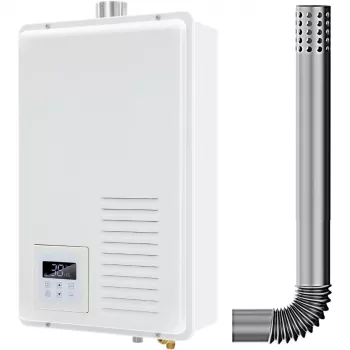
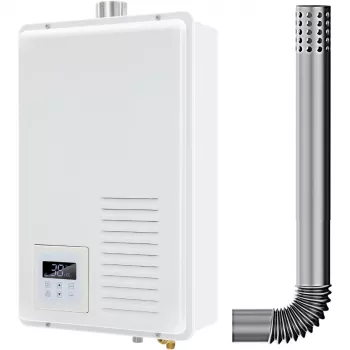
A propane tankless water heater can deliver hot water on demand while saving space compared with a storage tank. For indoor installations, the right setup depends on flow rate, temperature rise, venting, gas supply, and local code requirements. This guide explains how a 7.4 GPM indoor propane tankless unit fits typical household needs, what’s required to install it safely, and how to estimate real-world performance at different inlet-water temperatures.
What “7.4 GPM” means in real use
“7.4 GPM” is a performance class, not a promise that every home will see 7.4 gallons per minute at any time. Actual hot-water flow depends on how cold your incoming water is and how hot you want the outlet temperature to be.
- Flow rate changes with temperature rise: the bigger the jump from cold inlet water to your setpoint (often 120°F), the more the heater has to work, and the more it may limit flow to hold temperature.
- Warmer climates usually get more usable GPM: higher inlet temps reduce the temperature rise, so the unit can maintain higher flow.
- Fixture flow adds up quickly: a shower, a sink, and an appliance running together can exceed what a mid-capacity unit can heat at a high setpoint during winter.
- Practical expectations: one to two simultaneous draws (like a shower plus a sink) often feels comfortable when inlet water isn’t extremely cold; whole-house peak demand may require staggering usage or moving up in capacity.
Quick planning guide: estimated usable hot-water flow
| Incoming Water Temp | Target Hot Temp | Temperature Rise | Estimated Usable Flow (GPM) | Typical Use Example |
|---|---|---|---|---|
| 60°F | 120°F | 60°F | Moderate to High (near rated in many cases) | Shower + bathroom sink |
| 50°F | 120°F | 70°F | Moderate | One shower with stable temperature |
| 40°F | 120°F | 80°F | Lower | Shower OR kitchen use at a time |
| 35°F | 125°F | 90°F | Lowest | Single fixture focus; avoid simultaneous draws |
Indoor installation essentials: venting, combustion air, and clearances
Indoor propane units must move exhaust safely outdoors while maintaining the right combustion conditions. The venting method, allowed pipe materials, maximum run lengths, and termination clearances vary by model, so the installation manual and local code govern the details.
- Venting: choose the correct vent type and route it with permitted lengths and elbows. Poor venting can cause nuisance shutdowns, condensation issues, or unsafe operation.
- Combustion air: depending on design and where the unit is installed (tight mechanical room, closet, basement), you may need a dedicated air intake or code-compliant room-air provisions.
- Service clearances: leave space to reach gas connections, water shutoffs, isolation valves for flushing, inlet screens, and the control panel.
- Smart placement: a closer location to main bathrooms/kitchen reduces wait time, but you still need a safe and code-compliant vent termination point.
For deeper background on venting and safety practices around fuel gas appliances, installers often reference the NFPA 54 National Fuel Gas Code along with local requirements.
Propane supply requirements and why sizing matters
Tankless water heaters can pull a high BTU load when hot water is flowing. If the propane supply system can’t deliver steady pressure and volume at peak demand, performance suffers.
Water quality and maintenance for consistent instant hot water
Comfort and control: temperature stability, minimum flow, and recirculation options
Reducing fixture flow can also improve comfort and capacity during peak use; the EPA WaterSense program is a helpful reference for efficient showerheads and faucets.
Safety and compliance checkpoints
For an overview of how tankless systems operate and what affects efficiency, the U.S. Department of Energy guide to tankless water heaters is a useful primer.
Product spotlight: 7.4 GPM indoor propane tankless option
In stock now:
Propane Tankless Water Heater, 7.4 GPM, Indoor Use, Instant Hot Water
and a handy household add-on for routines:
Eco-Friendly Laundry Day Checklist | Sustainable Living Guide | Digital Download Printable for Green Home & Zero Waste Lifestyle.
At-a-glance checklist before ordering
| Item to Verify | Why It Matters | What to Measure/Confirm |
|---|---|---|
| Temperature rise needs | Determines usable GPM | Incoming cold-water temp in winter; target setpoint |
| Gas supply capacity | Prevents pressure drop and shutdowns | Pipe size, run length, regulator capacity, other appliances |
| Venting path | Ensures safe exhaust and good combustion | Wall/roof route, allowable lengths/elbows, termination clearances |
| Service access | Simplifies maintenance and improves lifespan | Clearances for flushing ports, filters, control panel |
| Water quality | Reduces scaling and performance loss | Hardness level; filtration/softener plan |
FAQ
Can a 7.4 GPM indoor propane tankless water heater run two showers at the same time?
Sometimes, but it depends on winter inlet-water temperature, the hot-water setpoint, and the combined showerhead flow rates. As a rule of thumb, two low-flow showers are more likely to work in milder inlet temperatures, while colder climates often require staggering showers or lowering flow to keep temperature stable.
Does an indoor propane tankless water heater need electricity?
Many indoor models use electricity for ignition, controls, and often a combustion fan. During a power outage, the heater may not run unless you provide backup power such as a battery system or generator sized for the unit’s requirements.
How often should a propane tankless water heater be descaled?
Many households descale about once per year, but hard-water areas or heavy use may require more frequent flushing. Common signs it’s time include reduced hot-water flow, longer warm-up behavior, or noticeable temperature instability.













Leave a comment