Outdoor Skills Workbook: Survival Drills for Hike & Camp
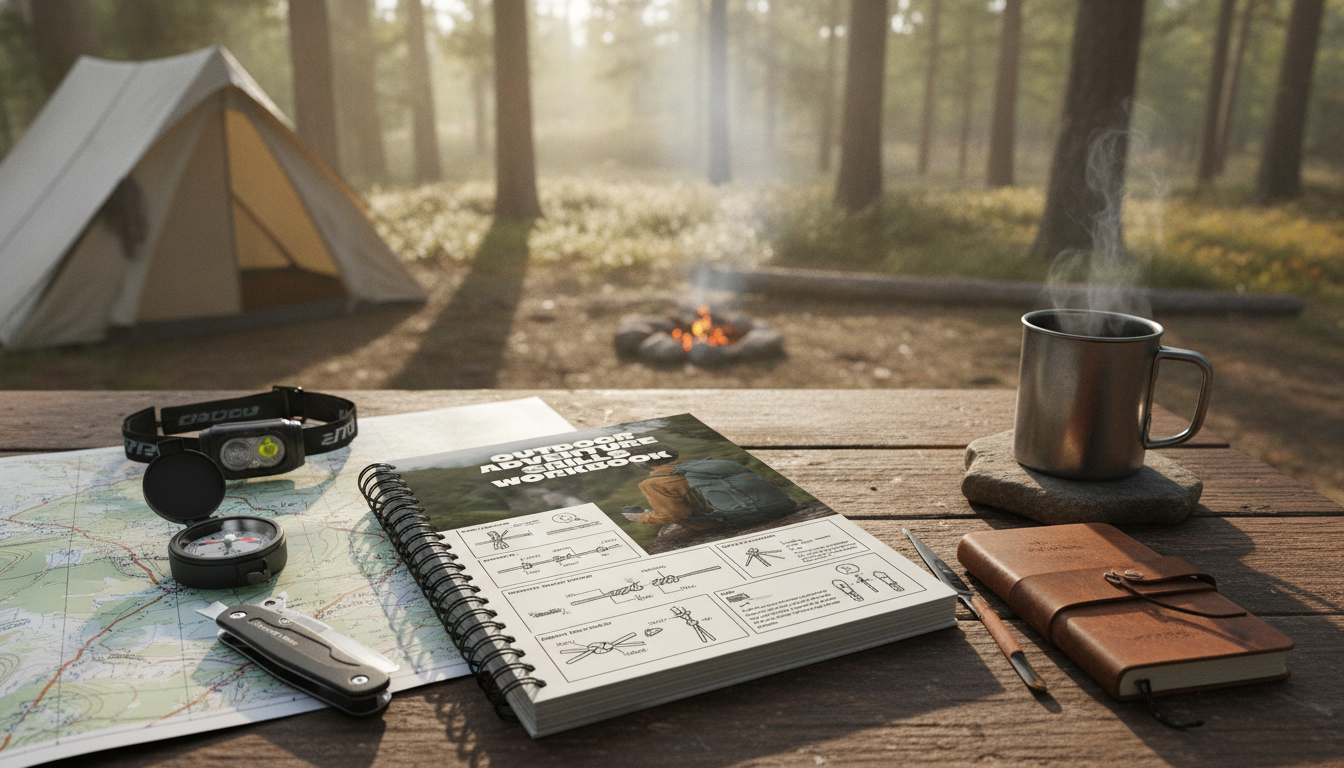
Outdoor Adventure Skills Workbook: A Digital Survival Guide for Hiking, Camping, Bushcraft & Wilderness Skills
Building confidence outdoors comes from practicing the right skills in the right order. A workbook-style survival guide helps turn scattered tips into repeatable drills—so navigation, shelter, fire, water, and emergency planning become habits rather than trivia. This guide breaks down what to expect from a digital outdoor skills workbook, how to use it for real trips, and how to structure safe practice sessions from backyard to backcountry.
What a Workbook-Style Survival Guide Does Differently
A traditional guidebook can explain a lot, but field competence usually comes from reps—doing the skill, noticing what went wrong, and tightening the process. A workbook approach is built for that.
- Turns core wilderness topics into step-by-step exercises, checklists, and review prompts rather than long explanations only.
- Creates a practice loop: learn → try → record results → adjust → repeat, which makes skills stick under stress.
- Supports trip planning with printable pages or on-phone reference for quick checks before leaving camp.
- Helps reduce common beginner errors such as overpacking, underestimating weather, and skipping contingency plans.
Core Skill Areas to Build (and What “Competent” Looks Like)
Competence outdoors doesn’t mean knowing everything—it means reliably handling the most common problems before they escalate.
- Navigation: orient a map, identify terrain features, follow a bearing, and maintain situational awareness without relying solely on a phone.
- Shelter: select a site, manage wind and runoff, and pitch or improvise shelter quickly while keeping insulation dry.
- Fire: choose safe locations, prepare tinder/kindling/fuel, and reliably ignite with at least two methods in damp conditions.
- Water: find sources, decide on treatment method, and maintain clean/dirty separation to prevent contamination.
- Knots and cordage: tie a small set of high-value knots (e.g., taut-line hitch, bowline, clove hitch) for shelter and gear repair.
- First aid and emergencies: recognize early hypothermia/heat illness signs, communicate a plan, and know when to stop and seek help.
- Leave No Trace: minimize impact through durable surfaces, proper waste management, and respectful campsite practices.
For impact-reduction fundamentals, the Leave No Trace Seven Principles are a dependable baseline to align practice with responsible travel.
A Simple Practice Plan: From Backyard Drills to Overnight Trips
Skills build fastest when complexity rises slowly. The goal is to make your decision-making and setup routines automatic before you add distance, weather exposure, or remoteness.
- Week 1–2 (home or local park): map orientation, basic knots, packing system, and stove/fire safety drills.
- Week 3–4 (day hikes): navigation with landmarks, water carry/treatment routine, weather checks, and pace management.
- Week 5–6 (single-night camp): shelter setup under time limits, camp kitchen workflow, and nighttime warmth management.
- Ongoing: after-action notes—what worked, what failed, what to change next time (gear, food, route, timing).
Skill Modules and Practical Drills
| Skill module | Beginner drill | Field-ready milestone | Common mistake to avoid |
|---|---|---|---|
| Navigation | Orient map and identify 5 visible features | Follow a short bearing and confirm position with terrain | Relying on GPS without a backup plan |
| Shelter | Pitch in calm weather, then repeat in wind | Choose a site that stays dry after rain | Setting up in low spots or near dead branches |
| Fire | Build a tinder bundle and feather sticks | Ignite in damp conditions with a backup ignition | Using large wood too early |
| Water | Practice clean/dirty bottle separation | Treat water consistently without shortcuts | Cross-contaminating clean water |
| Emergency readiness | Write a trip plan and share it | Carry signaling and know when to turn back | Pushing on despite deteriorating conditions |
What to Look For in a Digital Outdoor Workbook
Not all downloads are built for real-world use. A strong digital workbook should support both planning and execution—without turning into a wall of text.
- Clear progression: lessons that build from fundamentals to scenario-based practice.
- Actionable pages: checklists, packing lists, skill trackers, and reflection prompts.
- Mobile-friendly formatting: quick reference on the trail plus print-friendly pages for planning.
- Scenario sections: weather shifts, getting benighted, lost-and-found strategies, gear failure, and injury response.
- Safety emphasis: risk assessment, turning-around rules, and decision points that prevent small problems from escalating.
For weather risk and preparedness, keep a reliable source bookmarked before you leave reception—resources from the NOAA National Weather Service can help frame conservative decisions around storms, heat, and cold.
Using the Workbook on Real Trips
The biggest payoff comes when the workbook stops living in a downloads folder and starts guiding your routines on actual outings.
For first-aid refreshers and skill-building beyond reading, the American Red Cross first aid and safety resources are a solid starting point.
Recommended Digital Downloads
- Outdoor Adventure Skills Workbook (digital survival guide) — a structured, drill-forward format for hiking, camping, bushcraft basics, and wilderness readiness.
- Eco-Friendly Laundry Day Checklist | Sustainable Living Guide (Digital Download Printable) — a useful add-on for travelers who want a simple system for clothing care and lower-impact routines between trips.
Outdoor Adventure Skills Workbook (Digital Download)
Safety Notes for Skill Practice
FAQ
Is a digital survival workbook useful without internet access?
Yes—download and save the file locally on your phone/tablet and print the most-used pages (trip plan, checklists, emergency steps). Because batteries and devices can fail, a small printed “quick pack” is a practical backup for critical info.
Which skills should be learned first for hiking and camping safety?
Start with trip planning, navigation basics, weather awareness, water management, and warmth/shelter fundamentals. Once those are steady, add fire skills, knots, and more advanced bushcraft techniques.
How long does it take to feel confident with basic wilderness skills?
For many people, noticeable confidence builds in a few weeks of consistent practice, while dependable competence often takes a few months. Short, frequent drills plus one conservative overnight at a time—and writing down lessons learned—speeds up progress.
















Leave a comment