80 lb/Day Commercial Ice Maker: 27.5 lb Bin Guide
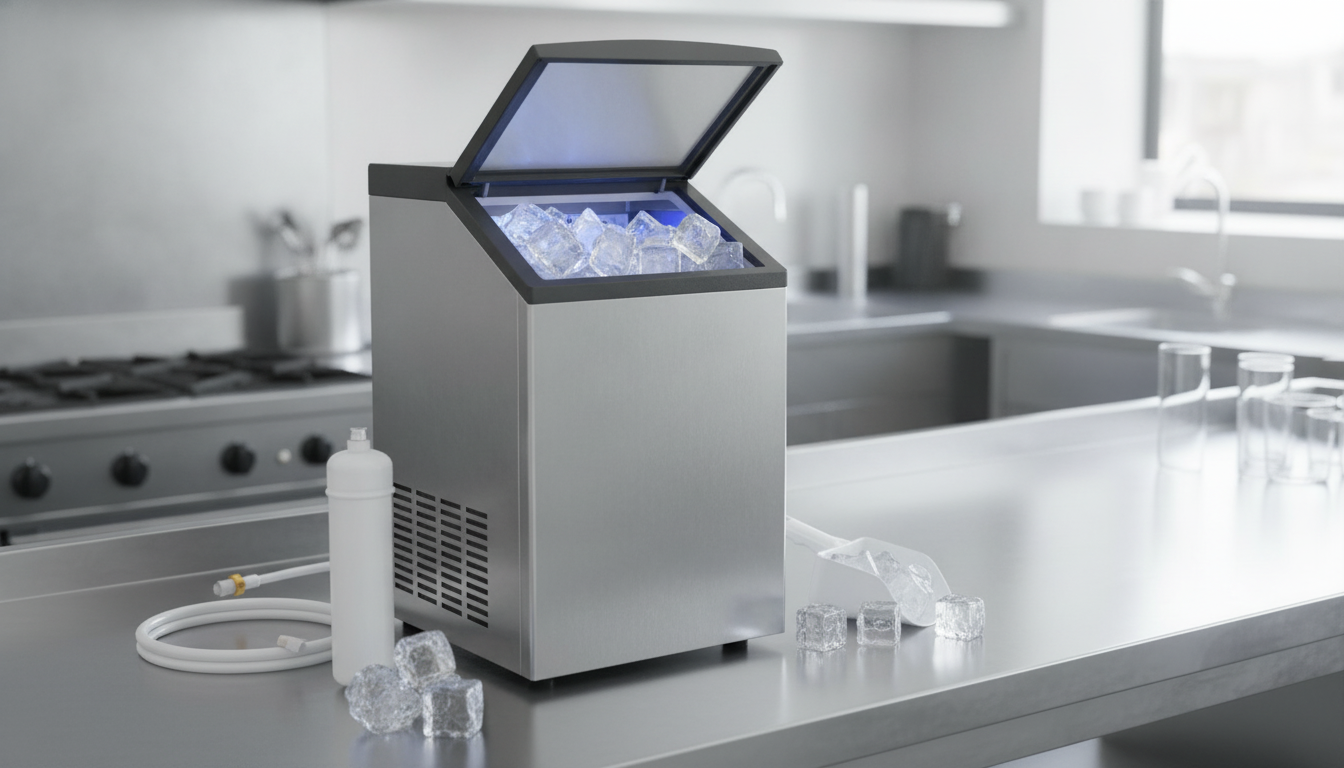
Commercial Ice Maker: Understanding 80 lbs Daily Ice Production and 27.5 lbs Storage
A commercial ice maker’s daily production and built-in bin capacity determine whether service stays smooth during peak hours. An “80 lbs per 24 hours” rating tells you how much ice the unit can produce across a full day of cycling, while “27.5 lbs storage” tells you how much ice is ready to grab right now. Below is a practical way to translate those numbers into real-world planning for cafés, bars, offices, clinics, studios, and small event prep. For more guidance, see 10 CFR Part 431 Subpart H — Automatic Commercial Ice Makers.
What the production and storage numbers actually mean
Daily ice production (lbs/24 hours) is the maximum amount of ice the machine can produce in a day under specific test conditions—typically a moderate room temperature and moderate incoming water temperature. It’s a capacity benchmark, not a promise that every environment will hit the number. For further reading, see [PDF] Commercial Ice Machines: The Potential for Energy Efficiency and ….
Storage capacity (lbs) is the amount of ice the bin holds at one time. Once the bin is full, the machine pauses to prevent overflow and resumes only after ice is removed.
In practice, production covers long shifts and multi-hour use, while storage covers rush windows. A smaller bin can still work well when ice is being used steadily because the machine keeps cycling and replenishing.
Real output varies with ambient heat, water temperature, airflow/ventilation, scale buildup, leveling/drain setup, and how often the bin door is opened (warm air accelerates melt and slows recovery).
Quick specs snapshot for the 80 lbs/24h, 27.5 lbs storage model
This configuration tends to fit steady, moderate ice demand where frequent refresh is normal—coffee programs, small bars, office break rooms, salons, and small event staging. The 27.5 lb bin provides a short “buffer” during a surge while the unit continues producing through the day. The key expectation is timing: 80 lbs/day is delivered over many cycles, not all at once.
| Spec | What it means for operations |
|---|---|
| 80 lbs ice production per 24 hours | Designed to replenish ice through the day for moderate volume service |
| 27.5 lbs storage capacity | Buffer for rush periods; machine pauses when bin is full |
| Commercial format | Intended for frequent use and faster cycling than typical home units |
Product options available now
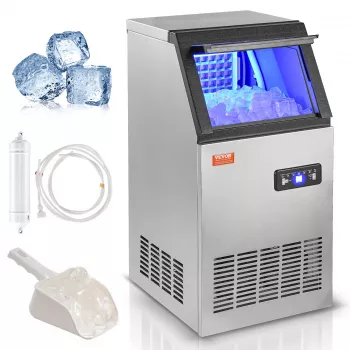
- Commercial Ice Maker 80lbs/24 Ice Production & 27.5lbs Storage Capacity
- The Ultimate Business Growth Hack Checklist: Scale Smarter, Not Harder (Digital Download)
Sizing ice production to your daily demand
Start with the simplest inventory: how many cold drinks and ice-forward tasks happen in a day. Ice demand isn’t only beverages—shaker tins, chilling bottled drinks, cold prep bins, and display needs can quietly consume a lot.
As a rough planning range, many cold beverages use about 0.5–1.0 lb of ice per drink depending on cup size and recipe. Ice-heavy cocktails, frequent shaking, or blended beverages can push usage higher. Multiply a realistic drink count by a realistic “ice per drink” estimate, then add a margin for waste (melt, spillage, over-scooping).
Next, think about when the ice is needed. If demand is steady from open to close, the machine’s daily production rate is usually the main limiter. If the location has sharp rush windows (morning iced coffee spike, a busy happy hour, or an intermission crowd), storage matters just as much as daily output because you need enough “ready ice” to cover that peak without pausing service.
Add extra headroom for hot seasons, warm kitchens, and special events. These conditions often reduce production efficiency while also increasing consumption.
How to use a 27.5 lb storage bin during peak periods
A 27.5 lb bin works best when it’s treated as a surge tank rather than the only source of ice for the entire day.
Conditions that change real-world ice output
For food-safety handling expectations (ice treated as food), reference the U.S. FDA Food Code. For efficiency considerations and broader guidance on commercial ice machines, see ENERGY STAR — Commercial Ice Machines.
Installation and daily upkeep that protect capacity
Where an 80 lbs/day commercial ice maker fits best
FAQ
Is 80 lbs of ice per day enough for a small café or bar?
It can be, as long as daily drink volume and peak timing fit the machine’s cycle-based output. Estimate your daily drinks and multiply by roughly 0.5–1.0 lb of ice per drink; if you also have short, ice-heavy rushes, plan on staging ice or choosing more storage so you don’t run out mid-peak.
Why does an ice maker produce less ice in summer or in a hot kitchen?
Higher room temperatures and warmer incoming water slow freezing cycles and increase melt in the bin. Better ventilation clearance, keeping the unit away from heat sources, and staying on top of condenser cleaning and descaling help maintain output.
How often should a commercial ice maker be cleaned and descaled?
Follow the manufacturer’s schedule, then adjust based on water hardness and how heavily it’s used. Many operations sanitize and descale anywhere from every few weeks to every few months; filtration often extends performance between deep cleanings and helps protect ice taste.














Leave a comment