Furniture-Style Dog Crate TV Stand with Drawers & Divider
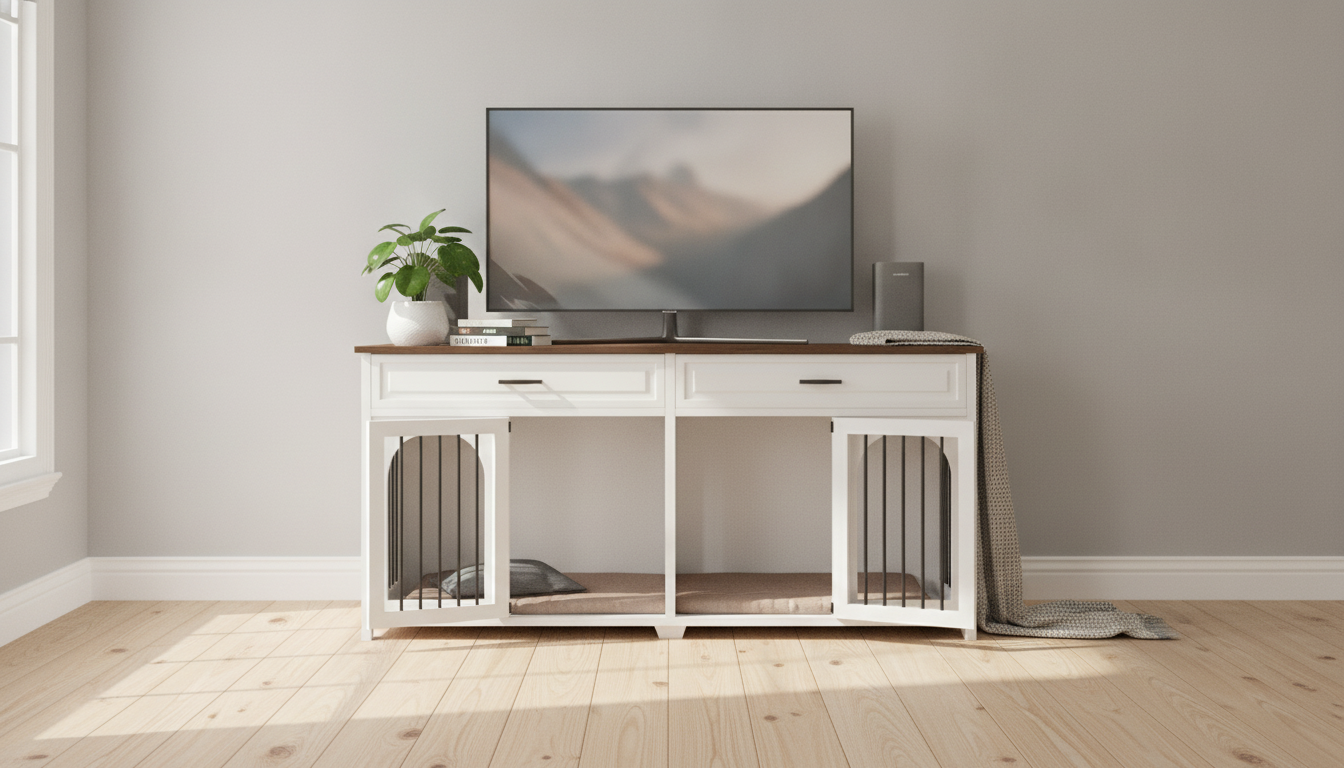
Furniture-Style Dog Crate with Divider, Drawers, and TV Stand Top: A Living-Room-Friendly Home Base for Your Dog
A dog crate can be both a calming retreat for a pet and a functional part of a room. A furniture-style crate with a divider, drawers, and a TV stand top is designed for homes where floor space and visual clutter matter—combining a secure enclosure with storage and a sturdy surface that can blend into everyday décor. Instead of looking like “pet gear,” it reads more like a console, helping open rooms feel intentional while still giving your dog a consistent place to settle. For more guidance, see Dog crates: When to use them and how to pick one.
What Makes This Style of Crate Different
This category stands apart from traditional wire crates because it’s built to live in the center of the home—not tucked away. The exterior is furniture-forward, closer to a media console than a kennel, which can make day-to-day life easier in shared spaces. For further reading, see How to Choose the Best Crate for Your Dog.
- Furniture-forward design: Better visual flow in open-concept rooms where a standard crate can feel visually loud.
- TV stand top: A usable surface for a screen, décor, or everyday essentials (always stay within the maker’s weight limits).
- Built-in drawers: Storage for leashes, waste bags, grooming tools, and treats so the “dog station” stays tidy.
- Interior divider: Adjusts usable space for training flexibility and helps create a cozier resting zone.
Key Features to Look For (and Why They Matter Day to Day)
Because this piece does double duty as home furniture and a secure enclosure, small design details have big everyday impact.
- Secure latching and sturdy enclosure: Helps prevent pushing, pawing, or nosing doors open—especially during the adjustment period.
- Ventilation and sightlines: Enough airflow and visibility to help your dog feel included without feeling “on display.”
- Divider placement options: The ability to reposition the divider makes it easier to scale space gradually as routines improve.
- Drawer glide quality: Smooth, stable slides reduce slamming and help drawers open predictably without sudden jerks.
- Stable, usable top surface: Important if it’s supporting a TV or frequently used items—wobble is a dealbreaker in active households.
- Floor protection: Feet or pads can reduce scratching while keeping the unit from shifting.
- Easy-clean surfaces: Interiors that wipe down quickly help manage fur, drool, and everyday mess.
Sizing and Fit: Getting the Divider and Interior Space Right
Fit is about comfort and security. Your dog should be able to stand naturally, turn around without bumping, and lie down without feeling trapped. The divider helps avoid “too much space too soon,” which can matter during training routines.
- Measure your dog’s length (nose to base of tail) and height (floor to top of head/ears) to estimate comfortable clearance.
- Use the divider to limit extra open area early on; oversized space can encourage a “rest here, bathroom there” habit.
- Confirm door opening size so entry is smooth—no crouching, shoulder squeezing, or hesitation at the threshold.
- Remember that thick floor padding can reduce usable interior height; keep airflow and headroom comfortable.
Quick Fit Check for Divider-Style Crates
| Check | What to Measure | Why It Helps |
|---|---|---|
| Stand and turn | Body length and shoulder width | Prevents cramped posture and stress |
| Lie down comfortably | Typical resting posture and body length | Reduces restlessness and frequent repositioning |
| Divider training phase | Current size vs. expected adult size | Avoids over-sized space during training routines |
| Entry comfort | Door opening width and height | Safer in/out movement, fewer bumps and hesitations |
| Floor padding impact | Thickness of any mat/liner | Maintains headroom and ventilation |
Where It Works Best in the Home (Especially Open Rooms)
Placement influences whether the crate feels like a calm “home base” or an afterthought. In open rooms, a furniture-style unit can define a pet zone without adding visual clutter.
- Living room placement: Helps your dog settle near the household’s activity—useful during TV time, work sessions, or guests.
- Corner setups: Can create a den-like feel, but avoid blocking airflow or squeezing it into a heat pocket.
- Away from vents: Direct heating/cooling drafts can make rest uncomfortable and can stir up dander.
- TV/cable planning: Route cords so nothing dangles near the enclosure and nothing can be reached through openings.
- Drawer clearance: Leave enough space to open drawers fully without bumping sofas, coffee tables, or walking paths.
Using the Drawers and Top Surface Safely
Training and Comfort: Making It a Place Your Dog Chooses
Care, Cleaning, and Long-Term Durability
Featured Picks (In Stock)
- Furniture-Style Dog Crate with Divider, Drawers, and TV Stand Top (In stock)
- From Open Rooms to Intentional Zones Bundle – 10-in-1 Guide for Multi-Functional Living Spaces (In stock)
FAQ
Is a divider useful for adult dogs, or only puppies?
A divider can still be useful for adult dogs who settle better in a cozier den-like space, or when you want to temporarily limit movement during rest periods. It’s not a substitute for proper overall sizing—adult dogs still need enough room to stand, turn around, and lie down comfortably.
Can a TV safely sit on top of a furniture-style dog crate?
It can, as long as the top is rated for the TV’s weight and the setup is stable and anti-tip safe. Secure the TV, manage cords so they can’t be reached, and avoid placing items that could fall and startle your dog.
What should be stored in the drawers?
Good options include leashes, waste bags, grooming tools, small towels, and treats stored in sealed containers. Avoid keeping medications, toxic products, or small choking hazards in drawers that are easy to access.










Leave a comment