Avocado Oil for Face: Benefits, Best Uses, Routine Tips
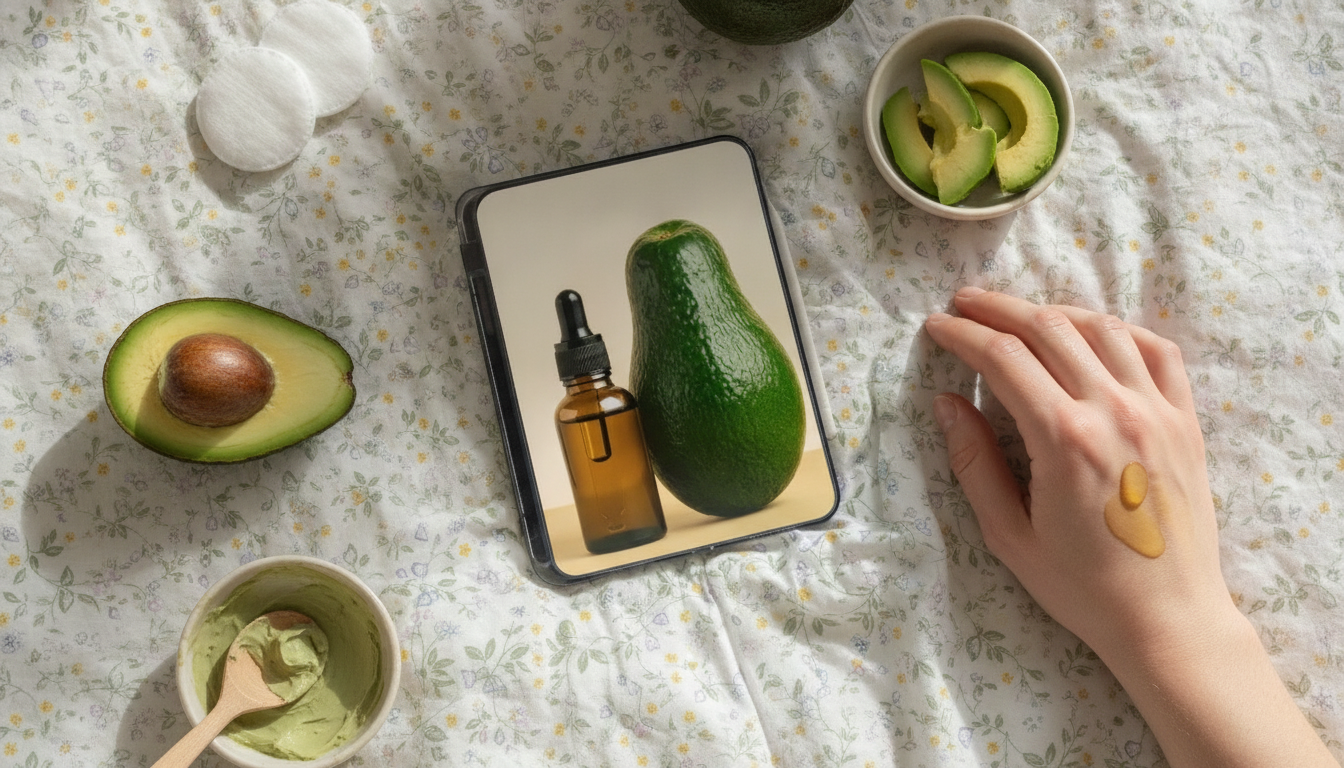
Avocado oil is a nutrient-dense, lipid-rich oil that can help support the skin barrier, reduce the look of dryness, and improve how skin feels—especially when dehydration, flaking, or tightness are in the mix. This guide breaks down what makes avocado oil different, who it tends to work best for, how to use it without feeling greasy, and a practical checklist for adding it to a routine with fewer guesswork moments.
What makes avocado oil different from other face oils
Avocado oil is often favored when skin feels “under-moisturized,” not just dry on the surface. Its naturally occurring lipids can help soften rough patches and make tight skin feel more comfortable.
- Naturally rich in fatty acids that help soften rough patches and reduce the feel of tight, dry skin.
- Contains skin-supportive compounds (like tocopherols/vitamin E and plant sterols) that can help calm the look of stressed skin.
- Often described as a more “cushiony” oil that pairs well with creams and can boost comfort in drier climates.
- Works best when applied to slightly damp skin or layered over water-based hydration.
If your skin tends to look dull or feel papery after cleansing, avocado oil can be a helpful “finishing step” that reduces that squeaky, tight sensation. For general moisture and barrier-support habits, the American Academy of Dermatology’s dry-skin tips are a solid reference point for daily routines and environment-related triggers: https://www.aad.org/public/everyday-care/skin-care-basics/dry/dry-skin.
Skin concerns avocado oil tends to pair well with
Avocado oil isn’t a “fix everything” product, but it can be a reliable comfort step for certain patterns—especially when dryness and sensitivity show up together.
- Dryness and flaking: helps reduce the look of patchiness by supporting a smoother surface.
- Dehydration: seals in hydration when layered after a hydrating serum or mist.
- Compromised barrier: can improve comfort when skin feels tight, stingy, or reactive to many products.
- Dull-looking skin: can add a healthy-looking glow when used sparingly.
- Seasonal sensitivity: helps buffer skin during cold weather, wind, or indoor heating.
If you’re new to face oils, it may help to think of avocado oil as the “seal” that goes on top of water-based hydration. Cleveland Clinic’s overview of facial oils (discussing jojoba in particular) also reinforces the general idea that oils can support softness and comfort when used appropriately: https://health.clevelandclinic.org/jojoba-oil-benefits.
How to use avocado oil without clogging or feeling greasy
The quickest way to make avocado oil feel heavy is applying too much on completely dry skin. A lighter touch—plus a little water-based hydration underneath—usually makes it feel smoother and more wearable.
- Start low: 1–2 drops for the face is often enough; add more only if skin still feels tight after 10 minutes.
- Apply on damp skin: pat on after toner/serum to lock in water and reduce heavy feel.
- Mix-in method: blend 1 drop into a moisturizer to improve spread and reduce shine.
- Spot method: use only on dry zones (cheeks, around mouth) if the T-zone gets oily.
- Night vs. day: many prefer nighttime use; daytime use can work if sunscreen layers well on top.
- Patch test: test behind the ear or on the jawline for several days before full-face use.
Simple ways to fit avocado oil into a routine
| Routine step | How to use | Best for |
|---|---|---|
| After cleanser | Apply to damp skin, then moisturizer | Very dry, tight-feeling skin |
| After serum | Pat 1–2 drops over hydrating serum | Dehydrated skin needing comfort |
| Mixed with cream | Blend 1 drop into moisturizer in palm | Normal-to-dry skin, beginners |
| Targeted zones | Tap onto flaky patches only | Combination skin |
| Night seal | Finish with a thin oil layer | Cold weather or barrier support |
Choosing an avocado oil that’s skin-friendly
Not all avocado oils feel the same on the skin. A few quick checks can help you pick one that stays fresh and layers well.
For readers who like to dig deeper into the science of topical oils and barrier function, NCBI’s database is a helpful place to explore published research (including fatty acids and skin barrier topics): https://www.ncbi.nlm.nih.gov/.
A practical checklist for building an avocado-oil routine
Digital guide: Avocado Oil – Your Skin’s Best Kept Secret
For a quick reference you can pull up anytime, Avocado Oil – Your Skin’s Best Kept Secret (digital guide) breaks down avocado oil benefits for skin and how to use it in real routines, with a natural beauty checklist to help standardize steps and reduce trial-and-error.
If you enjoy simple checklists that make routines easier to repeat, Eco-Friendly Laundry Day Checklist is another easy, on-demand download designed to streamline everyday habits.
FAQ
Can avocado oil be used on the face every day?
Daily use can work, especially for dry skin, but it’s usually best to start a few nights per week and increase if skin stays comfortable and clear. Keep the amount low (often 1–2 drops) and apply to damp skin or mix into moisturizer.
Is avocado oil good for acne-prone or oily skin?
It can be, but tolerance varies by person. Try using it only on drier areas first, keep the drop count low, and patch test; if congestion increases, reduce frequency or switch to mixing a single drop into moisturizer.
When should avocado oil go in a skincare routine?
Use it after water-based steps like toner or serum, then follow with moisturizer (or mix it into your moisturizer). In the morning, sunscreen should be the final step.















Leave a comment