Family Declutter & Clean Day Checklist: 3-Hour Reset
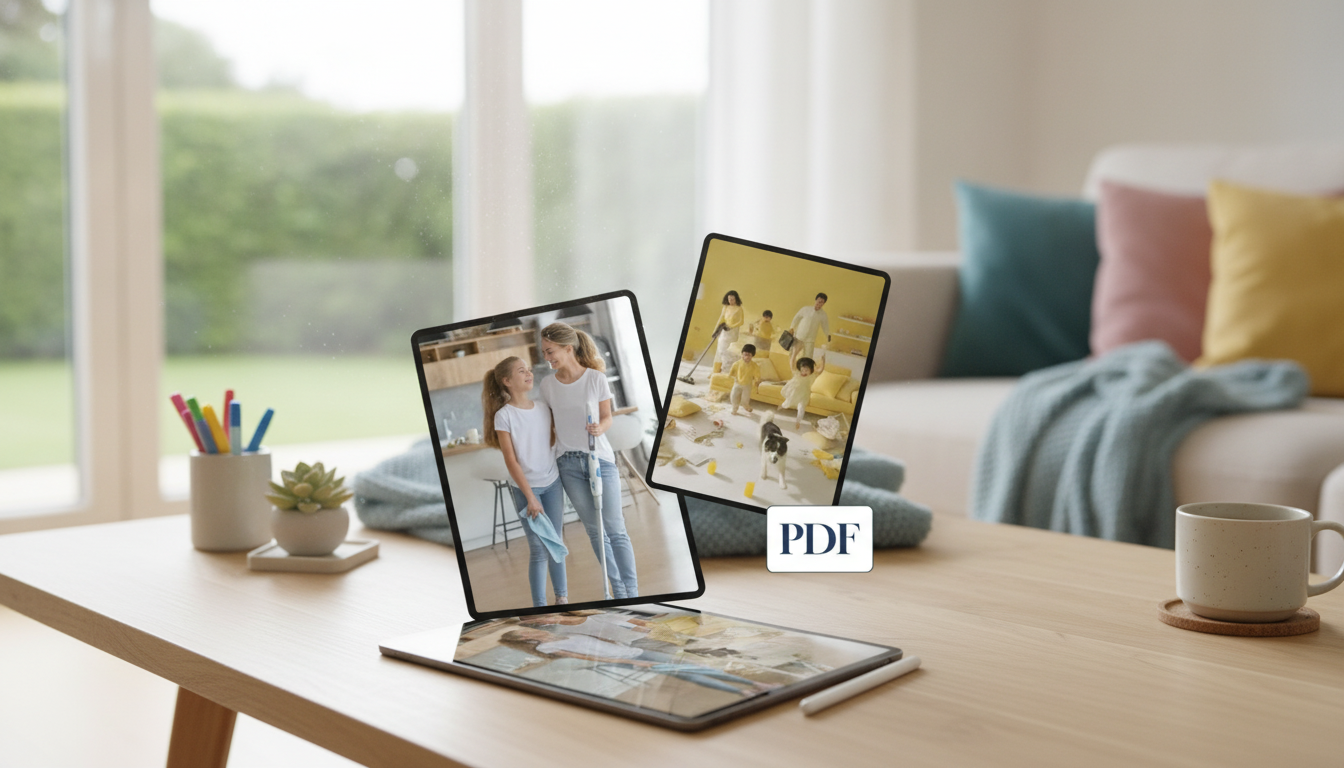
Family Declutter & Clean Day: A Simple Checklist Routine That Gets Everyone Involved
A dedicated declutter-and-clean day works best when the plan is clear, the time is boxed, and every family member has an age-appropriate role. With a short prep the night before, a fast declutter sprint, and a simple cleaning reset, you can get the home back to “comfortable and functional” without turning the day into an all-weekend project.
If your household does better with a step-by-step list everyone can follow, a structured download like the Family Declutter & Clean Day Checklist (printable digital download) can make the routine easier to repeat month after month.
Set the day up for success (15 minutes the night before)
The secret to a calmer clean day is reducing choices before you start. A quick “pre-flight” the night before keeps the morning from stalling out.
- Pick 3–5 focus areas only. Good examples: entryway, living room, kitchen counters, one bathroom, and a quick kids’ floor sweep.
- Decide the finish line. “Clear surfaces + floors + trash out” is a better goal than perfection.
- Stage supplies in one portable caddy. Trash bags, a donation box, microfiber cloths, all-purpose cleaner, glass cleaner, broom/vacuum, a timer, and sticky notes for “belongs elsewhere.”
- Choose music and a visible timer. Plan one short break per hour so nobody feels trapped in chores.
- Assign two landing spots. One “drop zone” for donations and one spot for items that need a new home (your relocate baskets).
For cleaning product safety and best practices—especially when disinfecting bathrooms and high-touch areas—follow guidance from the CDC.
The 90-minute declutter sprint (keep decisions fast)
Decluttering first makes cleaning dramatically faster. When surfaces are clear, wiping and vacuuming take minutes instead of feeling endless.
- Start with trash and recycling first. It’s the quickest win and immediately reduces visual clutter.
- Use one simple rule for every item: Keep (has a home), Donate/Sell, Trash, or Relocate (goes in a basket to deliver later).
- Work top-down. Counters, tables, shelves, then floors. Avoid opening every drawer unless it’s one of your chosen focus zones.
- Limit relocate baskets to one per person. Too many “I’ll deal with it later” piles quietly recreate clutter.
- For kids’ items, set a choice limit. Example: “Pick 10 favorites to keep out; the rest gets stored or donated.”
Quick role ideas for a family clean day
| Family member | Declutter task | Clean task | Finish step |
|---|---|---|---|
| Ages 3–6 | Pick up toys into bins (keep/donate piles with help) | Wipe low surfaces with a damp cloth (water only) | Put shoes/backpacks in the entry spot |
| Ages 7–10 | Sort books/games; fill one donation bag | Dust baseboards or wipe cabinet fronts | Empty small trash bins into main bag |
| Teens | Declutter one personal zone (desk, closet section, backpack) | Vacuum/sweep one room; wipe mirrors | Take donations to the drop zone; set aside “sell” items |
| Adults | Decide on high-impact clutter (counters, papers, pantry hotspots) | Bathroom reset or kitchen reset (surfaces + sink + floor) | Bag donations, schedule drop-off, and take out trash |
Room-by-room reset order (the “most visible first” method)
Momentum is easier when the first hour produces obvious results. Start with spaces you see constantly, then move inward.
- Entryway: Clear surfaces, sort shoes, hang bags, and add a small “outgoing” bin for returns and donations.
- Living room: Remove out-of-place items, quick dust, wipe remotes/tables, and vacuum high-traffic areas.
- Kitchen: Clear counters, wash or load dishes, wipe surfaces, and do a quick fridge scan for expired items if time allows.
- Bathroom: Clear counter clutter, disinfect high-touch points, swap towels, and do a quick toilet/sink wipe-down.
- Bedrooms: Make beds first, then tackle floors and surfaces. Skip deep closet projects on clean day.
If anyone in the home has allergies or you’re tackling dust-heavy zones, improving airflow and filtering can help while you work. The EPA’s indoor air quality resources are a solid reference.
A time-block schedule that keeps momentum
Time boxing prevents the “we’re cleaning forever” feeling and helps kids stay engaged because the end is visible.
For families building consistent routines, simple repetition matters more than occasional marathon sessions. Parenting-friendly habit and routine guidance can also be found through the American Academy of Pediatrics (HealthyChildren.org).
Make it repeatable: simple family rules that reduce re-cluttering
If open layouts or multi-use spaces are the source of recurring clutter (kids’ stuff migrating into the living room, work supplies taking over the dining table), a zone-based setup can make daily resets easier. The From Open Rooms to Intentional Zones Bundle is designed to help define what belongs where, so “put it away” becomes a clear action instead of a debate.
Use a printable or digital checklist to stay on track
To make the routine plug-and-play, keep a copy of the Family Declutter & Clean Day Checklist (printable digital download) saved to your device and a printed version near your cleaning caddy.
FAQ
How long should a family declutter and clean day take?
Plan for about 2.5–4 hours with time blocks, including a short break. Limiting focus zones and stopping at the planned finish line keeps it productive without burnout.
What’s the best order to declutter and clean a room?
Start with trash, then donations, then relocate items into a basket. Clean top-down (surfaces first) and finish with floors so you don’t re-dirty areas you already cleaned.
How do you get kids to help without arguments?
Give clear, small tasks with a timer and built-in choices (with limits), and aim for quick visible wins. Pair the routine with music and a defined break so it feels structured rather than endless.















Leave a comment