Lazy Athlete Motivation Reset: 7-Day Kickstart Checklist
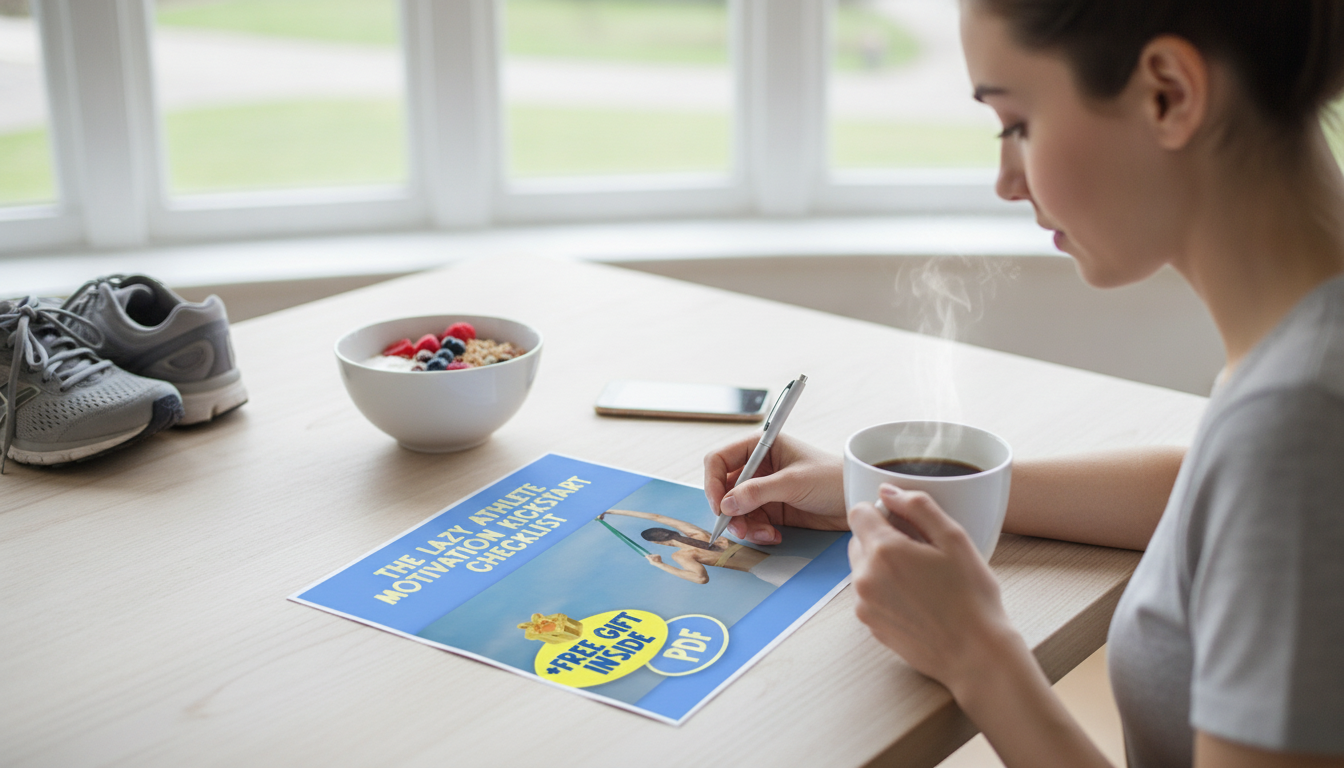
The Lazy Athlete Motivation Kickstart Checklist: A Simple Reset for Teens and Adults
Motivation problems in sports rarely come from “not caring.” More often it’s fatigue, overwhelm, unclear goals, or a training plan that feels too big to start. A kickstart checklist turns motivation into a repeatable routine: small actions that build momentum, reduce decision fatigue, and make showing up easier—even on low-energy days.
What “lazy athlete” usually means (and what it doesn’t)
“Lazy” is usually shorthand for low follow-through, not a character flaw. In most cases, the issue is the system around training—not the person.
- Low follow-through is often a system issue: unclear next steps, too many choices, or training sessions that feel punishing.
- Motivation fluctuates for everyone: consistency comes from cues, environment, and rewards more than willpower.
- Common patterns: procrastinating workouts, skipping warm-ups, quitting early, doom-scrolling before practice, or “starting Monday” repeatedly.
- Useful reframe: aim for “minimum effective effort” on bad days and “full effort” on good days—both count toward progress.
- When to take it seriously: persistent exhaustion, mood changes, or loss of interest across life may warrant medical or mental health support.
Fast self-check: the 5 reasons motivation collapses
If motivation is dropping, scan these five categories first. Fixing just one can restart momentum.
- Energy: sleep debt, under-fueling, dehydration, or too much training intensity too often.
- Confidence: fear of failing, comparing to others, or feeling behind creates avoidance.
- Clarity: goals are vague (“get in shape”) instead of actionable (“3 workouts this week”).
- Friction: gear not ready, workouts not planned, travel time too long, or too many steps to begin.
- Reward: no immediate win, no feedback loop, and no enjoyable element in the process.
Motivation slump → quick fix
| If the problem is… | Try this today | Why it works |
|---|---|---|
| Low energy | 10-minute session + early bedtime | Protects consistency without draining recovery |
| Low confidence | Easiest version of the workout | Builds a win and reduces fear |
| Low clarity | Write the next 3 workouts (date + time) | Removes decision-making at the moment of action |
| High friction | Pack gear and set a start cue (alarm + shoes by door) | Makes starting automatic |
| No reward | Track streaks + add a fun finisher (music, sport game, small treat) | Creates immediate payoff |
The Kickstart Checklist (use it on “can’t get going” days)
This is the reset that keeps training alive when you’re not “feeling it.” The goal isn’t to hype yourself up; it’s to make starting so small you can’t talk yourself out of it.
- Choose the smallest acceptable win (5–15 minutes): commit to finishing only that.
- Use the 2-minute warm-up rule: start moving before deciding how you feel.
- Remove one barrier right now: fill a water bottle, put on training clothes, open the workout plan.
- Pick one focus cue: breathing, posture, footwork, or tempo.
- End with a “done” ritual: write what you completed and when the next session is scheduled.
- If you missed the session, run a reset script: “Missed one day; next action is ___ at ___.” No negotiating.
For a ready-to-print version you can keep by your bag or desk, use Lazy Athlete Motivation Kickstart Checklist (printable for teens and adults).
A 7-day momentum plan for teens and adults
Think of this as a one-week reboot. You’re not trying to “get in the best shape of your life.” You’re proving that consistency is doable—and repeatable.
- Day 1: “Show up” day—minimum session + schedule the next two sessions before sleep.
- Day 2: Skill or technique emphasis—keep intensity moderate to rebuild confidence.
- Day 3: Strength basics—short, simple movements; stop 1–2 reps before failure.
- Day 4: Active recovery—walk, mobility, or light sport play; focus on enjoyment.
- Day 5: Repeat Day 1—prove consistency is repeatable, not heroic.
- Day 6: Slight progression—add 5 minutes or one extra set, not a full overhaul.
- Day 7: Review and reset—what worked, what blocked you, and one change for next week.
Motivation tools that work when willpower doesn’t
Motivation is unreliable by design. The workaround is building simple defaults that trigger action even when energy is low.
If you want a simple baseline for how much activity supports health (without turning every session into a grind), see the CDC Physical Activity Guidelines. For practical, everyday movement ideas, the NHS exercise guidance is also a solid reference.
Printable guide: how to use it without quitting after week one
If you like using checklists to reduce mental clutter beyond training, pair it with Eco-Friendly Laundry Day Checklist (printable routine support) to keep household tasks from piling up and draining your bandwidth.
When a motivation slump signals a bigger issue
FAQ
What if a teen athlete refuses to practice even with rewards or consequences?
Check for burnout, confidence issues, social/team stress, or unclear expectations first, then reduce the commitment to something like 10 minutes. Offer autonomy-supportive choices (which drill, what time, what music) and set one small, measurable goal together instead of escalating punishment.
How do you motivate yourself to train when you feel tired after school or work?
Do a minimum session with a fixed start cue (alarm, calendar block) and follow a 2-minute warm-up rule to get moving before you decide. Prep gear and a snack or water ahead of time so you’re not fighting friction when you’re already drained.
Is it better to push through low motivation or take a rest day?
If it’s low drive without illness or sharp pain, complete the minimum session to protect the habit. If you notice signs of sickness, injury pain, or chronic exhaustion, choose rest and recovery and schedule the next training time before the day ends.
















Leave a comment