Pet Stress Relief Toolkit: 7-Day Calm-Home Routine
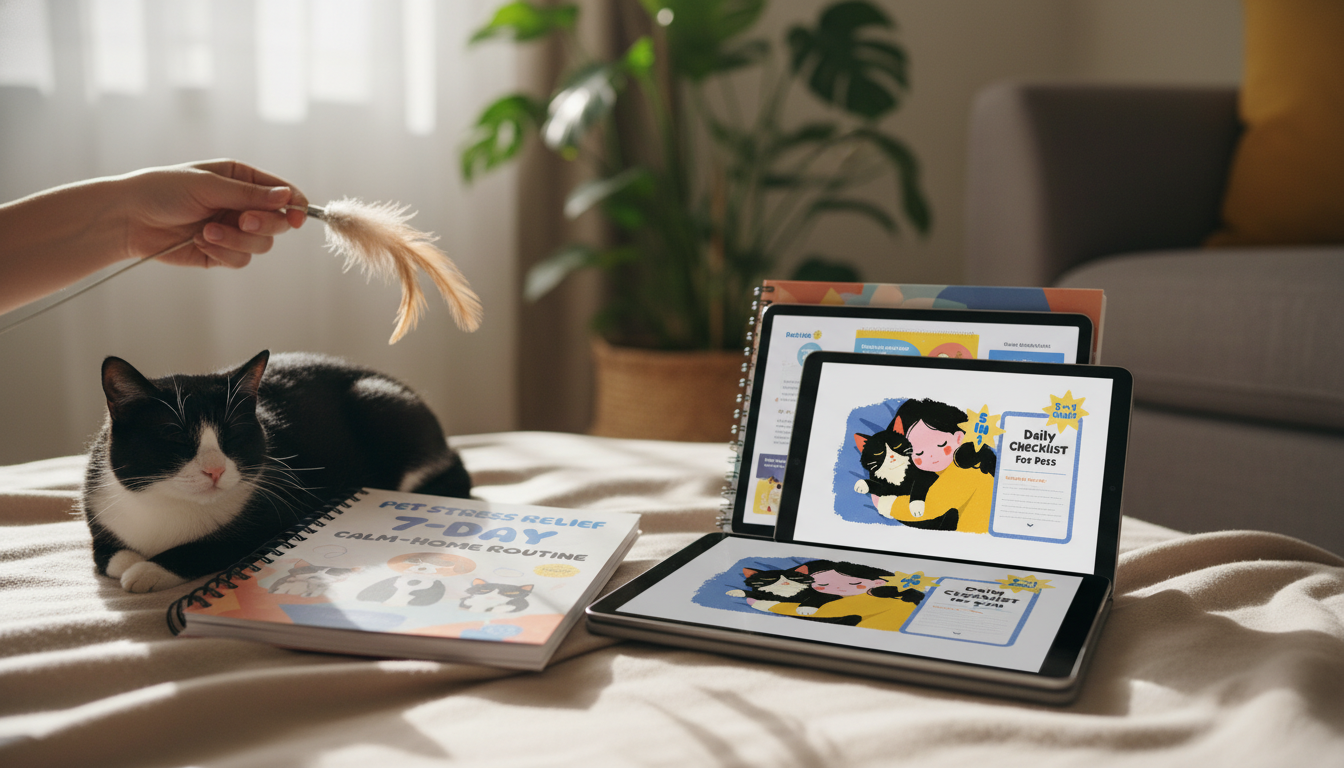
Pet Stress Relief Toolkit: A Calm-Home Plan for Happier, Relaxed Pets
Stress in pets can show up as pacing, hiding, barking, destructive chewing, accidents, or changes in appetite and sleep. While every dog and cat is different, many do best with a structured, repeatable routine—especially during common triggers like visitors, loud noises, grooming, vet trips, and travel. A “toolkit” approach makes calm habits easier to practice (and repeat) by combining clear steps with a simple checklist so progress is visible over time.
Signs a Pet May Be Stressed (and What They Can Look Like at Home)
Stress signals often appear before the “big” behaviors (like bolting or snapping). Catching early signs helps you lower intensity sooner and prevent overload.
- Body language: tucked tail, pinned ears, “whale eye,” crouching, trembling, panting when it isn’t hot.
- Behavior shifts: clinginess, avoidance, hiding, leash reactivity, excessive barking or meowing.
- Comfort behaviors: licking, chewing paws, yawning, lip-licking, shedding more than usual.
- Household disruptions: scratching doors, destroying items, accidents, or refusing food.
- When to call a vet: sudden behavior changes, persistent vomiting/diarrhea, injuries, severe fear, or pain signals.
For additional pet-owner guidance, the American Veterinary Medical Association (AVMA) and the ASPCA offer helpful behavior resources to support safe next steps.
Common Stress Triggers and Quick Stabilizers
“Stabilizers” are the fast actions that reduce pressure right now. They don’t replace training, but they help your pet stay under threshold so learning can happen later.
| Situation | What to do now | What to practice later |
|---|---|---|
| Loud noises | Move to quiet room + white noise | Sound desensitization with rewards |
| Guests arrive | Leash + safe zone + chew | Mat training and calm greetings |
| Left alone | Food puzzle + calming routine | Graduated alone-time training |
| Car ride | Secure carrier/harness + airflow | Short positive trips, crate/car desensitization |
- Noise events (thunder, fireworks): create a quiet room, close curtains, add white noise; offer a covered crate only if your pet already likes it.
- Separation or schedule changes: keep departures low-key, add predictable enrichment, practice short absences.
- Visitors and busy households: provide a safe zone, manage greetings, prevent crowding and forced contact.
- Grooming and handling: pair touch with treats, break tasks into tiny steps, stop before your pet panics.
- Vet and travel: carrier/crate comfort training, plan for motion/nausea, reward-based loading and unloading.
What’s Inside the 5-in-1 Pet Stress Relief Toolkit Bundle
A repeatable system helps you respond consistently when life gets loud, busy, or unpredictable. The Pet Stress Relief Toolkit for Happier, Relaxed Pets – 5-in-1 Bundle of Guide, eBooks, and Checklist is designed to organize the process: identify triggers, choose calming routines, practice skill-building exercises, and track what’s working.
| Component | Best for | How to apply this week |
|---|---|---|
| Guide/eBook modules | Understanding triggers and planning routines | Pick one trigger and follow the step-by-step plan |
| Behavior-building exercises | Creating calmer responses over time | Practice 5–10 minutes daily, stop before stress spikes |
| Checklist | Consistency and progress tracking | Track one habit (safe zone, enrichment, decompression walk) daily |
| Calm-home routines | Reducing overall arousal | Add predictable meal, play, rest windows |
| Troubleshooting steps | Setbacks and difficult days | Scale back difficulty, increase distance, reward calm |
If you like paper-style tracking for household routines, a simple add-on can be the Eco-Friendly Laundry Day Checklist | Sustainable Living Guide | Digital Download Printable for Green Home & Zero Waste Lifestyle—useful as a separate “home rhythm” list so pet routines stay predictable even on busy days.
A 7-Day Calm-Home Starter Routine
This starter week focuses on lowering overall arousal and building one or two reliable skills. Keep sessions short, reward calm, and end early—success looks like “still relaxed,” not “pushed through.”
- Day 1: Set up a safe zone (quiet corner, bed, crate if already loved). Add water, a chew, and a cover or visual barrier.
- Day 2: Create a predictable daily rhythm (meals, potty breaks, play, rest). Reduce surprise interactions and rough handling.
- Day 3: Add low-arousal enrichment (snuffle mats, lick mats, scatter feeding) rather than only high-energy play.
- Day 4: Teach a settle cue on a mat; reward loose muscles, soft face, and steady breathing.
- Day 5: Practice gentle handling in tiny steps (touch → treat → pause), especially paws, ears, collar/harness areas.
- Day 6: Start mini-desensitization for one trigger (low-volume sounds, short absences, calm guest routine).
- Day 7: Review notes, keep what helped, adjust what was too hard, and repeat at a slower pace if needed.
For dog-specific fear and anxiety training tips, the American Kennel Club (AKC) also outlines practical, reward-based guidance.
Using the Checklist to Make Progress Visible
Checklists reduce guesswork. Instead of relying on memory (“Was last week better?”), you’ll see patterns and make smarter adjustments.
Simple checklist fields to capture
| Field | Example entry |
|---|---|
| Trigger | Doorbell |
| Intensity (1–5) | 3 |
| Recovery time | 4 minutes |
| What helped | Mat + treats + white noise |
| Next adjustment | Lower volume, increase distance from door |
When a Toolkit Isn’t Enough: Getting Professional Help
Pet Stress Relief Toolkit Bundle: Who It Fits Best
FAQ
How long does it take to see stress reduction in pets?
Small improvements can appear within days, such as faster recovery or more frequent calm moments. Durable behavior change often takes weeks, especially when you stay under threshold and use the checklist to track recovery time and gradual progress.
Can this approach help with thunderstorm or fireworks fear?
Yes—combine immediate management (quiet room, white noise, safe zone) with gradual desensitization and counterconditioning. Severe noise phobia may require veterinary support alongside training.
Is a checklist really useful for pet anxiety?
Logging triggers, intensity, and recovery time reveals patterns and helps prevent moving too fast. It also creates clear notes you can share with a veterinarian or qualified trainer if progress stalls.
















Leave a comment