Solo Female Travel Safety System: Calm, Confident Habits

Lady’s System to Travel Alone without Fear: Practical Safety Habits for Solo Women
Solo travel can feel freeing and intimidating at the same time. A clear, repeatable system helps reduce uncertainty: plan the basics, limit avoidable risks, and build simple habits that keep awareness high without stealing the joy of the trip. The goal isn’t to be “on guard” 24/7—it’s to set up a few dependable defaults so you can relax more often.
Start with a safety baseline before booking
Many problems are easiest to prevent before you ever hit “reserve.” A smart baseline focuses on where you’ll sleep, how you’ll arrive, and what the most common local issues look like.
- Choose neighborhoods with reliable transit, good lighting, and consistent foot traffic; prioritize walkability over “cheap but far.”
- Check recent traveler reports, local advisories, and common scams for the destination; note what happens most often and where.
- Pick lodging with 24/7 front desk or controlled entry when possible; confirm lock quality and emergency exits.
- Create a realistic arrival plan: daylight check-in, pre-downloaded maps, and a backup route if transit is delayed.
For official trip-prep guidance, review the U.S. Department of State Traveler’s Checklist and destination health advice from the CDC Travelers’ Health.
Build a “three-layer” plan: digital, physical, and social
A strong solo travel routine doesn’t rely on one tool or one perfect decision. It uses layers—so if one thing fails (battery dies, bag is stolen, plans change), the other layers still support you.
Three-layer safety system
| Layer | What to set up | Why it matters | Quick example |
|---|---|---|---|
| Digital | Offline maps, location sharing, emergency contacts, backup payment method | Reduces panic when lost or phone is limited | Save the hotel pin + screenshot reservation details |
| Physical | Secure bag, minimal jewelry, door safety items, duplicated essentials | Limits theft impact and improves room safety | Keep one card in wallet and one in hidden pouch |
| Social | Check-ins, trusted contact, local boundaries, code word | Creates accountability and fast support | Text “green” daily; “red” means call immediately |
- Digital layer: enable a strong passcode, turn on location sharing with a trusted contact, and set up emergency shortcuts on your phone.
- Physical layer: use a crossbody bag with zippers, keep essentials in two places, and consider a door wedge/portable alarm (where allowed).
- Social layer: establish check-in times, a code word for “call me now,” and one person who keeps a copy of itinerary details.
Arrival and first 24 hours: the highest-leverage habits
The first day carries extra variables—new streets, new transit, new social norms, and often jet lag. Simple habits here prevent most “I wish I hadn’t…” moments later.
- Arrive with a charged phone, small cash, and the address written down; avoid displaying confusion at transit hubs.
- Do a quick “orientation loop” near lodging in daylight: find a convenience store, pharmacy, and the safest route back.
- Use a conservative approach to nightlife on day one: limit alcohol, keep your drink in hand, and leave before fatigue sets in.
- Trust early discomfort signals; change routes, step into a public place, or call a ride without debating it.
Blending in without shrinking: presence, boundaries, and confidence cues
“Blending in” doesn’t mean hiding—it means looking like you belong. Predatory behavior often targets hesitation and distraction, so your body language and boundaries do real work.
- Walk with purpose: head up, relaxed shoulders, steady pace; avoid stopping abruptly in isolated spots to check your phone.
- Use simple boundary phrases that don’t invite negotiation: “No, thank you,” “I’m meeting someone,” “I can’t help,” then disengage.
- Keep personal details private with strangers (hotel name, room number, solo status); use neutral answers when asked.
- Practice “soft awareness”: notice exits, staff, and groups—then return attention to enjoying the experience.
For broader context on safer public spaces, see UN Women resources on safe cities and public spaces.
Transportation rules that prevent most problems
Transportation is where solo travelers are most exposed: you’re moving, you’re tired, and you can’t fully control who’s nearby. A few pre-decided rules reduce risk quickly.
Room and personal security: simple checks that matter
A practical routine that keeps fear from running the trip
Support tools and guided systems to stay consistent
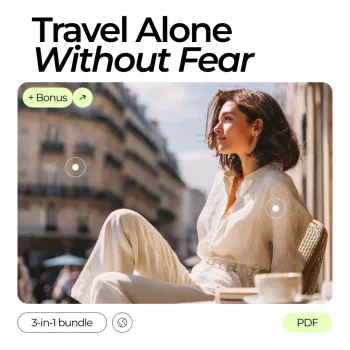
- Lady’s System to Travel Alone without Fear – Solo Travel for Women Safety Tips is designed to help you set up planning steps, situational awareness cues, boundary scripts, lodging checks, and transportation rules in a repeatable format.
- Pair practical safety habits with a simple confidence routine so preparation doesn’t turn into constant worry. For a quick daily reset, Your Bright Mindset Boost Checklist: 3 Simple Steps to Think Positive Every Day can support steadier decision-making on the road.
FAQ
What are the most important safety steps for women traveling alone?
Use a repeatable system: choose safer lodging and location, plan your arrival in detail, follow transportation rules (verified rides, well-lit routes), set check-ins with a trusted contact, and use firm boundary phrases with strangers.
How can solo travelers reduce risk without feeling anxious the whole time?
Practice “soft awareness” instead of constant scanning, pre-decide rules (night routes, ride verification, drink limits), and stick to short daily routines so safety becomes automatic rather than obsessive.
Is it safe to share travel updates on social media while traveling alone?
It’s safer to delay posts, avoid real-time location tags, and never share lodging details. Share live updates privately with trusted contacts instead of broadcasting your exact location.















Leave a comment