Tea Tree Oil for Skin & Scalp: Benefits, Uses, Safety
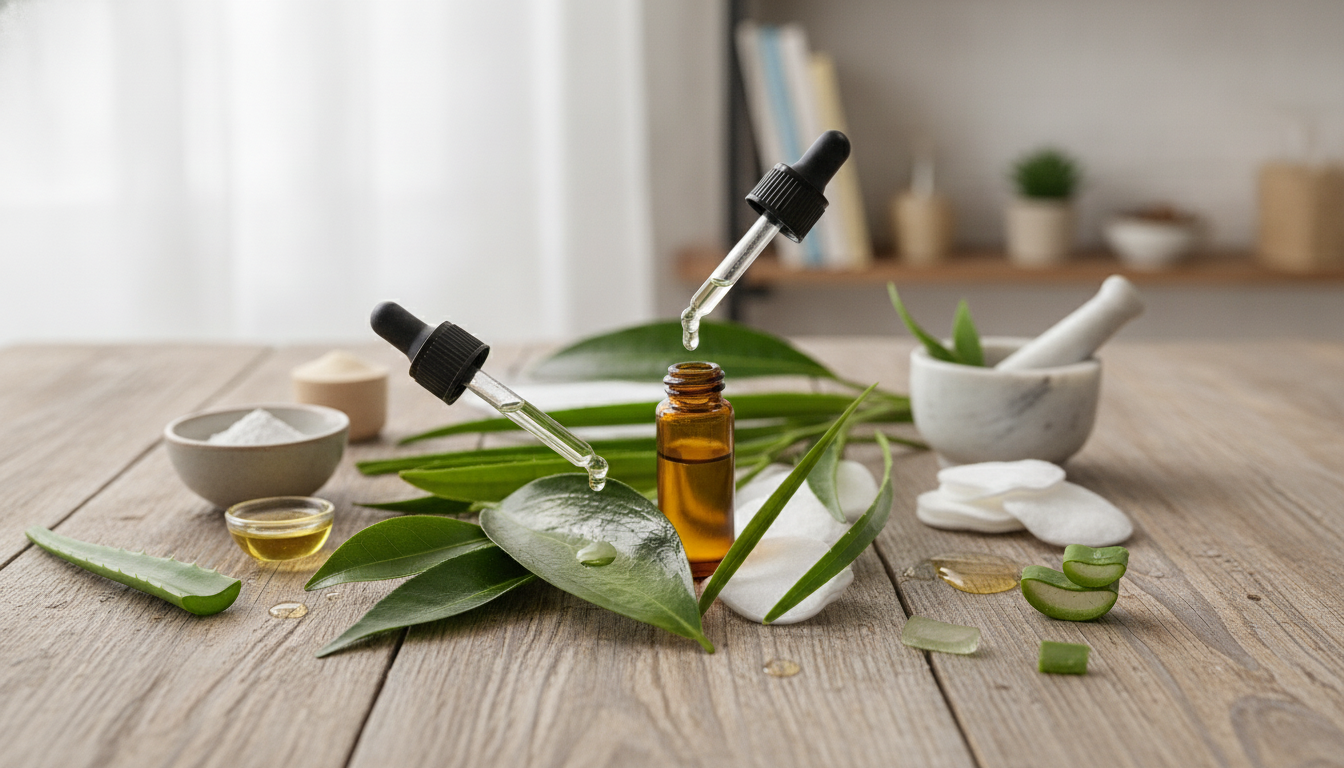
Tea Tree Oil in Beauty: What It Is and Why It’s So Popular
Tea tree oil is an essential oil distilled from the leaves of Melaleuca alternifolia, a plant native to Australia. In modern beauty routines, it’s valued for its fresh, clarifying feel—especially when skin or scalp looks oily, congested, or prone to the occasional blemish. You’ll most often see it used as targeted spot care, mixed into occasional masks, blended into scalp treatments, or added (in tiny amounts) to body care.
One important detail gets overlooked: “natural” doesn’t automatically mean “gentle.” Tea tree oil is potent, and using it correctly—proper dilution, patch testing, and careful placement—matters just as much as choosing a good formula.
What Gives Tea Tree Oil Its Signature Benefits
Tea tree oil contains a range of aromatic compounds that contribute to its well-known cleansing sensation on skin and scalp. One of the most discussed components in research and cosmetic use is terpinen-4-ol, which is often associated with tea tree’s purifying character.
In practice, tea tree oil tends to support a “cleaner-looking” surface by helping routines feel fresher and less congested—especially in areas that get sweaty, oily, or occluded by workout gear or heavy products.
Quality matters because composition can vary based on sourcing, distillation methods, and how the oil is stored. Oxidation is a big deal: older or poorly stored tea tree oil can become harsher-smelling and more irritating. Keeping your bottle tightly capped and away from heat and light helps maintain a more pleasant experience.
For deeper background and safety notes, see NCCIH’s tea tree oil overview and DermNet NZ’s tea tree oil resource.
Beauty Benefits by Concern (Where It’s Most Commonly Used)
Blemish-prone skin
Tea tree oil is commonly used as a diluted spot treatment for occasional breakouts. The goal isn’t to “burn” a blemish away—it’s to keep the area feeling cleaner and supported while your routine stays calm and consistent.
Oily-looking or congested-feeling skin
For oiliness, tea tree oil is best in short-contact routines (like a rinse-off mask) or in very low dilutions mixed into a basic moisturizer. Overuse can backfire by leaving skin tight or flaky, which can make skin look more uneven.
Post-workout body care (back, shoulders, chest)
Areas that feel congested after sweating may benefit from tea tree oil when it’s properly diluted into a body oil or incorporated into a body wash blend. Pair it with breathable fabrics and a fragrance-free wash to reduce compounding irritation.
Scalp freshness and buildup
Tea tree oil is often used in diluted scalp oiling or as a small add-in to shampoo to help scalp feel fresher. It can be especially appealing when scalp feels itchy or weighed down by styling buildup—just keep it low, rinse thoroughly, and avoid getting it in the eyes.
Ingrown-hair-prone areas
Some people use tea tree oil in body routines for areas prone to ingrowns, but timing and skin condition matter: never apply it to freshly shaved skin, broken skin, or irritated bumps. Keep dilution conservative and focus on barrier support.
How to Dilute Tea Tree Oil Safely (Practical Ratios)
| Use case | Dilution | Example mix | How often |
|---|---|---|---|
| Face spot care | 0.5–1% | 1 drop in 1–2 tsp (5–10 mL) carrier or gel | 1x daily max, pause if dry/peeling |
| All-over facial use (rare; for experienced users) | 0.5% | 1 drop in 2 tsp (10 mL) moisturizer | 2–3x/week |
| Body areas (back/shoulders) | 1–2% | 3–6 drops in 1 tbsp (15 mL) carrier | 3–4x/week |
| Scalp oiling | 1–2% | 5–10 drops in 2 tbsp (30 mL) carrier | 1–2x/week before shampoo |
| Bath (use with dispersant) | Very low; avoid direct oil in water | Mix into a teaspoon of unscented bath gel first | Occasional |
Routine Ideas That Keep Skin Calm and Consistent
Minimalist blemish routine (night)
Oil-control routine (1–2 nights per week)
Body breakout routine
Scalp routine (weekly)
Signs to scale back
Stinging, redness, tightness, flaking, or increased sensitivity are cues to stop and reset with bland basics. For acne that’s persistent or severe, self-care guidance like Mayo Clinic’s acne care overview can help clarify when it’s time to see a clinician.
Common Mistakes to Avoid
Who Should Be Cautious or Skip Tea Tree Oil
Shop Helpful Digital Guides and Lifestyle Picks
- Tea Tree Magic: Unlocking Nature’s Secret to Radiant Skin – A Complete Guide to the Beauty Benefits of Tea Tree Oil
- Eco-Friendly Laundry Day Checklist | Sustainable Living Guide | Digital Download Printable for Green Home & Zero Waste Lifestyle
- Elegant Korean Style Bow Pockets Short Coat for Women
FAQ
Can tea tree oil be applied directly to pimples?
It’s safer to dilute it first—typically around 0.5–1% for facial spot care—because undiluted tea tree oil can trigger dryness or irritation. Patch test before using it on your face, and limit frequency to avoid peeling or sensitivity.
How long does it take to see results from tea tree oil in a skincare routine?
Some people notice a “less congested” feel within a few days, but a consistent routine over a few weeks is a more realistic timeline. Stop or scale back if redness, stinging, or flaking develops.
Can tea tree oil help with dandruff or an itchy-feeling scalp?
It can be used diluted in a carrier oil as a pre-shampoo treatment or added in very small amounts to shampoo about 1–2 times per week. Rinse thoroughly and seek medical advice if flaking, itching, or redness is persistent or severe.















Leave a comment