Zero-Waste Laundry Day Checklist for an Eco-Friendly Routine
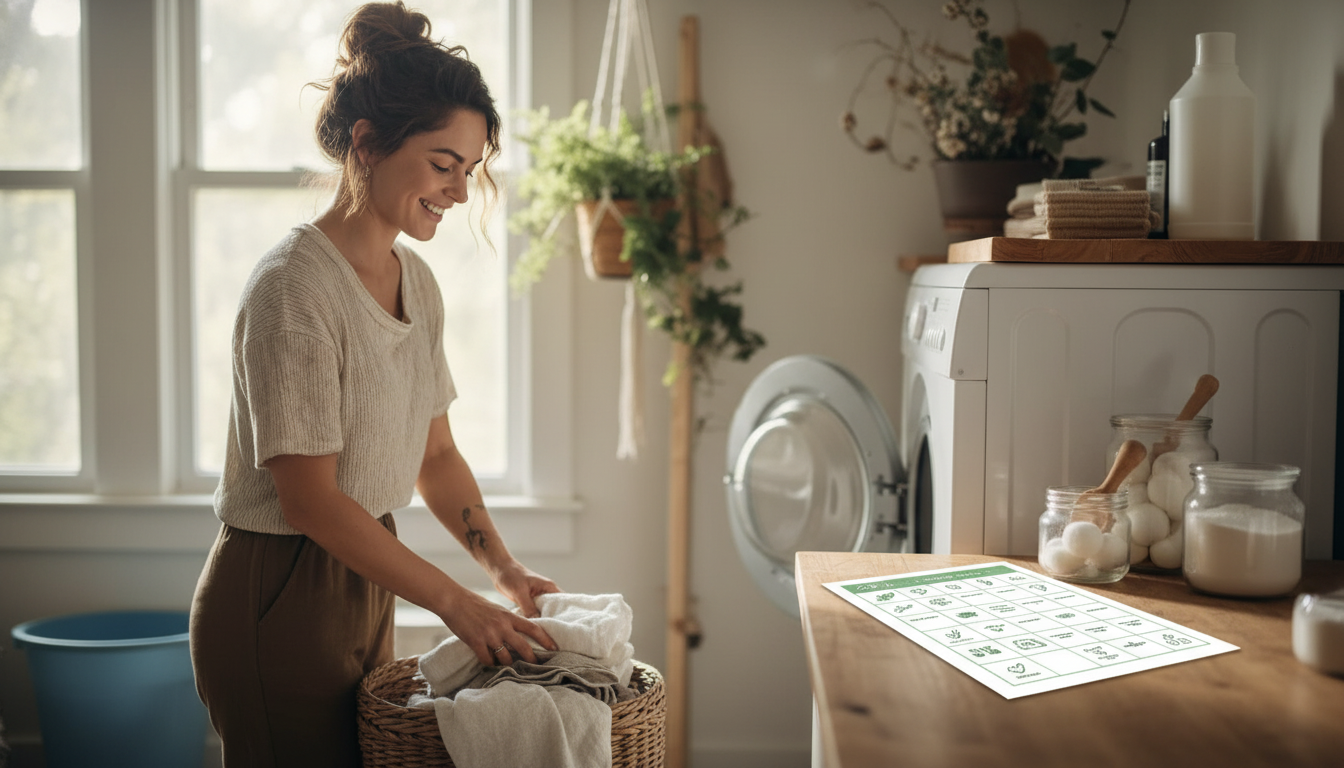
Eco-Friendly Laundry Day Checklist: A Simple, Zero-Waste Routine for a Greener Home
Laundry is one of the easiest weekly routines to make more sustainable without sacrificing clean, fresh clothes. A clear checklist helps reduce energy use, water waste, and unnecessary products while keeping fabric care consistent. This guide breaks laundry day into quick, practical steps—before, during, and after washing—plus a printable option to keep the routine on track at home.
What Makes Laundry Eco-Friendly
Eco-friendly laundry is less about buying lots of “green” extras and more about consistent, low-impact habits.
- Use less energy: prioritize cold-water washing, full loads, and air-drying when possible.
- Use fewer resources: measure detergent accurately and avoid extra rinse cycles unless needed.
- Reduce pollution: choose biodegradable, fragrance-light products and limit microfiber shedding.
- Extend garment life: gentler cycles and proper sorting reduce wear, fading, and stretching.
- Cut waste: shift from single-use packaging and disposable sheets to refillable or concentrated options.
For practical benchmarks on energy and water savings, see the U.S. Department of Energy guidance on washers (energy.gov) and ENERGY STAR tips (energystar.gov).
Before You Start: Set Up a Low-Waste Laundry Station
A simple setup prevents common mistakes that lead to rewashing, overdrying, and wasted products.
- Create two to four sorting bins (lights/darks, delicates, towels/linens) to prevent rewashing mistakes.
- Keep a small stain-treatment kit: soft brush, mild soap, baking soda, oxygen-based bleach, and a spray bottle.
- Store detergent in a dry, sealed container; keep a measuring spoon/cup that matches the dose for your machine.
- Use a washable laundry bag for delicates and to help reduce microfiber release from synthetics.
- Add a drying rack or line with clips to replace or reduce dryer time.
Laundry Day Setup Checklist (Quick Reference)
| Item | Why it helps | Low-waste alternative |
|---|---|---|
| Sorting bins | Avoids rewashing and overdrying | Repurposed baskets or boxes |
| Stain kit | Prevents repeat washes | Bar soap + brush + baking soda |
| Measuring scoop | Prevents overdosing detergent | Reuse a small scoop or tablespoon |
| Mesh laundry bag | Protects delicates; reduces shedding | Washable, reusable bag |
| Drying rack/line | Cuts energy use | Foldable rack or indoor line |
The Laundry Day Checklist (Step-by-Step)
Use this routine as a quick “start-to-finish” flow so you’re not making decisions mid-load.
- Sort thoughtfully: sort by color, fabric weight, and soil level; keep towels separate from lint-attracting items.
- Prevent damage: check pockets and close zippers/hooks to prevent snags and reduce micro-tears.
- Spot-treat early: let stain treatment sit 10–30 minutes instead of running a hotter cycle.
- Choose cold or cool water: reserve warm/hot for heavily soiled items or hygiene needs.
- Select the shortest effective cycle: long cycles can increase wear and energy use.
- Measure detergent: match load size and water hardness; overdosing often causes residue and extra rinsing.
- Skip fabric softener when possible: use wool dryer balls or vinegar in the rinse (machine-safe) as alternatives.
- Wash towels and bedding on a schedule: prevents “emergency” hot washes triggered by odors.
- Dry smarter: air-dry whenever possible; if using a dryer, clean the lint trap every load and avoid overdrying.
- Finish the job: fold and store promptly to reduce wrinkles and avoid re-drying.
Cold Water, Full Loads, and Smarter Drying
Most laundry energy use comes from heating water, which is why cold-water habits can have an outsized impact.
- Cold water saves energy: water heating is a major part of laundry’s footprint, so cold cycles deliver fast wins.
- Run full loads (without cramming): clothing should tumble freely for proper cleaning and fewer repeat washes.
- Use higher spin speeds: removing more water shortens dry time—especially helpful for towels and denim.
- Line-dry strategically: line-dry heavier items first, then rotate to finish indoors if weather is damp.
- Use sensor-dry if you have it: stop as soon as items are dry to reduce wear and wasted electricity.
If hot water is needed frequently in your household, improving how hot water is produced can help reduce upstream energy use. For a home upgrade option, consider the Propane Tankless Water Heater, 7.4 GPM, Indoor Use, Instant Hot Water to support more efficient on-demand hot water use where appropriate.
Detergent, Add-Ons, and What to Skip
Detergent is one of the easiest places to reduce waste and irritation while still getting great results.
For broader guidance on reducing household material use and waste, the U.S. EPA has practical recommendations (epa.gov).
Zero-Waste Habits That Make a Big Difference
Printable Checklist for Consistent Laundry Days
Eco-Friendly Laundry Day Checklist: Digital Download
If you want a quick routine you can repeat without thinking, the Eco-Friendly Laundry Day Checklist digital download is designed to keep laundry day simple: sort, pretreat, measure, wash, and dry with less waste. It’s a practical tool for reducing detergent overuse, preventing rewashes, and building consistent zero-waste household habits.
FAQ
Is cold water enough to get clothes clean?
For most everyday loads, yes—modern detergents and washing machines are designed to clean effectively in cold water. Use warm or hot water selectively for heavily soiled items, illness-related hygiene needs, or specific stains that respond better to heat (paired with targeted pretreatment).
How much detergent should be used for an eco-friendly wash?
Follow the label dosing and adjust for load size and water hardness, starting on the lower end of the recommended range. Too much detergent can leave residue, trap odors, and trigger extra rinsing that wastes water and energy.
What is the most sustainable way to dry laundry?
Line-drying or rack-drying is typically the most sustainable option because it avoids the dryer’s energy use. If you use a dryer, choose moisture-sensor settings, clean the lint filter every load, and stop as soon as items are dry—high spin cycles can also reduce drying time.
















Leave a comment