Sport Confidence Checklist: 3–7 Min Routine to Perform
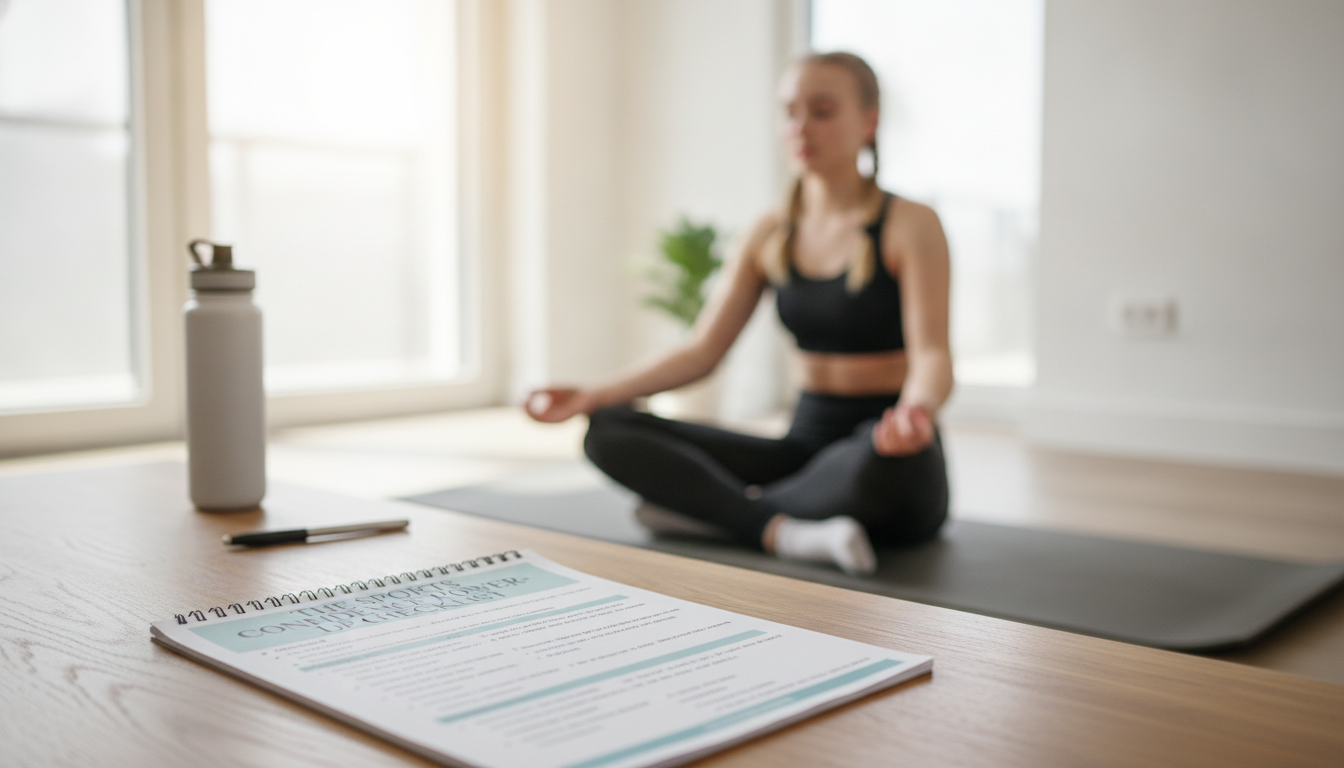
Confidence in sport isn’t just a feeling—it’s a repeatable process built from preparation, self-talk, focus, and recovery. When nerves hit or the game gets messy, a simple routine can keep your mindset steady and your performance more consistent. Below is a practical “power-up” approach that breaks sport confidence into doable steps and shows how a printable checklist can help you perform with more calm, clarity, and control under pressure.
What “sport confidence” really is (and what it isn’t)
Sport confidence works best when it’s treated like a trainable skill, not a mood you either have or don’t have. It grows when you stack evidence—quality practice reps, preparation habits, and small wins—and it fades when your routines disappear.
Healthy confidence is also flexible. It doesn’t require perfection, and it doesn’t collapse after a turnover, a missed shot, or a rough first half. You can be disappointed and still stay locked in. That’s the difference between “I made a mistake” and “I’m done.”
Two common traps are overconfidence and low confidence. Overconfidence skips the work (“I’ll be fine”) and gets punished when the pace rises. Low confidence ignores strengths (“I never come through”) and makes you play tight. In both cases, consistency suffers.
A clear routine beats chasing motivation. Motivation comes and goes; routines create stability before training and competition—especially when pressure is high.
Common confidence drains during practice and competition
Confidence often drops for predictable reasons. Naming them matters, because once you can spot the drain, you can plug it quickly.
- Mistake spirals: one error turns into negative predictions (“Here we go again”).
- Outcome obsession: focusing on stats, rankings, scouts, or winning instead of controllables.
- Comparison trap: measuring performance against teammates/opponents instead of personal process goals.
- Under-recovery: sleep debt, poor fueling, and mental fatigue make self-doubt louder (stress can amplify physical and mental strain; see the APA overview of how stress affects the body).
- Mixed cues: trying to remember too many technical adjustments at the same time.
The Confidence Power-Up Checklist approach
The checklist approach is simple: use a short set of prompts you can complete in about 3–7 minutes before practice or competition. Instead of waiting to “feel confident,” you create confidence through action.
This routine builds confidence from three buckets:
- Preparation (evidence): What have you done that proves you’re ready?
- Mindset (interpretation): What story are you telling yourself about pressure, mistakes, and effort?
- Execution (next action): What’s the next controllable thing you will do?
Keep your language specific and controllable. “Win the first touch” beats “Be confident.” The checklist acts like a warm-up for attention—similar to dynamic stretching for the mind. Consistency matters more than intensity: small daily reps build durable confidence faster than occasional big pep talks.
If you want a ready-to-print version that’s easy to repeat across practices, tryouts, and competition days, use The Sports Confidence Power-Up Checklist printable.
Printable checklist flow: before, during, and after performance
A confidence routine sticks when it matches the rhythm of sport: what you do before you start, how you reset mid-performance, and how you review afterward.
Before
- Choose 1–3 controllable goals (process goals, not outcomes).
- Identify one strength to lean on when things get fast.
- Set a simple reset plan for mistakes, so you don’t improvise under stress.
During
- Use quick cues—one breath, one word, one action—to return attention to the present play.
- When nerves spike, keep it short. A single cue word is easier to execute than a long thought.
After
- Review process wins (effort, focus, decisions), not just results.
- Note one adjustment for next time.
- Close the loop with a short recovery action (hydration, mobility, sleep plan).
| Moment | Prompt | Example cue |
|---|---|---|
| Pre-practice / pre-game | What are today’s controllables? | “Fast feet, clear communication, strong first rep” |
| Pre-start | What strength will lead my performance? | “I win 50/50 balls” |
| After a mistake | What’s my reset sequence? | “Exhale → eyes up → next job” |
| Between breaks | What’s the one focus for the next segment? | “Simple passes” / “High hands” / “Drive the knees” |
| Post-performance | What went right + one adjustment? | “Great effort on defense; next time start earlier” |
How to use self-talk and imagery without forcing “positive vibes”
If anxiety shows up, normalize it. Nerves can be reframed as readiness, not a sign of failure. A simple breath routine can also help you downshift quickly (see the NHS guide to breathing exercises).
Building confidence week to week (not just on game day)
For more athlete-focused mental skills education and common sport psychology topics, the Association for Applied Sport Psychology (AASP) is a helpful starting point.
A simple tool to make the routine stick
- The Sports Confidence Power-Up Checklist | How to Improve Self Confidence in Sport | Athlete Mindset & Performance Printable
- Eco-Friendly Laundry Day Checklist | Sustainable Living Guide | Digital Download Printable for Green Home & Zero Waste Lifestyle (a simple way to reduce “life clutter” so recovery habits stay consistent)
FAQ
How long does it take to build sport confidence?
Confidence improves fastest when you use a consistent routine and collect evidence from practice. Many athletes notice a difference in about 2–4 weeks of near-daily checklist use, with bigger gains across a full training cycle.
What should an athlete do right after a mistake to avoid spiraling?
Use a short reset: one slow breath, release the self-judgment, pick one cue word, then take one clear next action. Writing your personal reset sequence on your checklist makes it easier to access when emotions spike.
Can a confidence checklist help with performance anxiety?
It can help by reducing uncertainty and aiming your attention at controllables (breath, cue words, and next-action goals). If anxiety is persistent, severe, or interfering with daily life, working with a qualified professional can be a strong next step.















Leave a comment